Does shock change alkalinity?
Another cause for high alkalinity can be when you shock the pool. While this is performed to quickly rid the pool of pollutants, chlorine-based pool shock is highly alkaline, and can raise the water's total alkalinity level in the process.
Does chlorine raise or lower alkalinity?
Most people know that chlorine is an important chemical in keeping pool water safe for swimming. But adding too much chlorine can lower your pool's pH as well as its total alkalinity.
Will shock help lower alkalinity in pool?
I highly recommend that you shock your pool using liquid chlorine. This article is for anyone who needs to lower high total alkalinity (TA) and high pH down to the recommended levels for a swimming pool.
What increases alkalinity pool?
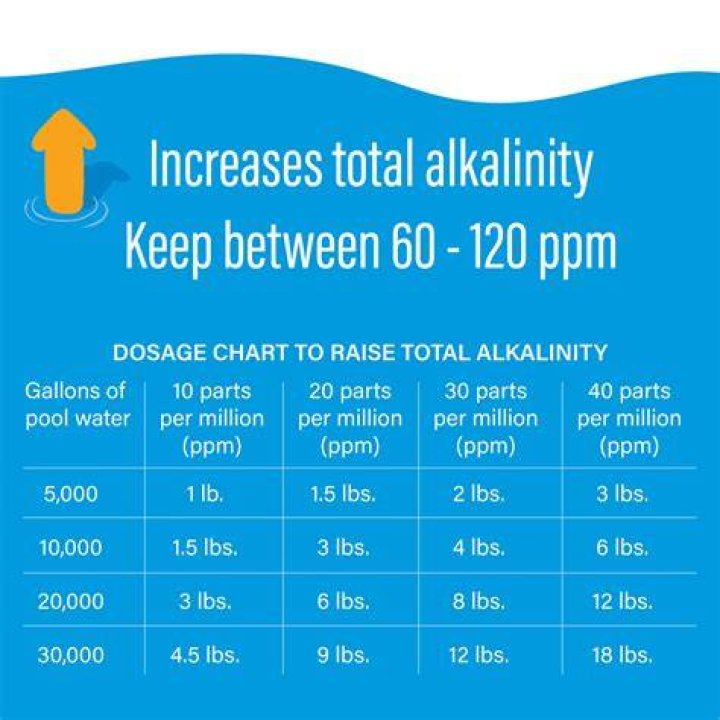
There are two ways to increase your swimming pools alkalinity level: sodium bicarbonate (baking soda) or any type of alkalinity increaser product. If you choose to purchase an alkalinity increaser product be sure the product is made from sodium bicarbonate, which is the main substance used to raise pH.
Adjusting Ph and Alkalinity in your pool
Does shock raise pH?
It will slightly raise your pH, so make sure you adjust pH while using it. As the name implies, it will also raise your calcium hardness levels in your pool slightly. It is sold in granular or in pucks/tablets. A close relative of calcium hypochlorite is sodium hypochlorite, commonly known as bleach.
Why is my pool alkalinity always low?
It probably rained hard. Rainwater might be low in alkaline levels, and when it rains hard, your pool may become flooded, and this will affect the average alkalinity of your pool. If you drain or backwash your pool, adding freshwater with a low alkalinity level is bound to deplete the overall pH of your pool.
What do I do if my pool has high alkalinity?
The first step is to lower pH by adding muriatic acid. Lowering pH will make your pool water more acidic and neutralize the alkaline materials in your pool. You should aim to lower your pH to a range of 7.0 to 7.2. The second step is to aerate your pool or hot tub to break up the remaining alkaline materials.
Does pH plus increase alkalinity?
Raising PH Level
PH Plus will increase your Alkalinity level slightly too so keep an eye on this as remember Total Alkalinity is the buffer to allow your PH to be set.
How do I lower alkalinity without lowering pH?
You can decrease pH without lowering the Total Alkalinity using Carbon Dioxide (CO₂) injection for pH control. Still, this does not lessen one without an effect on the other. When CO₂ is injected into water, it forms carbonic acid (H₂CO₃), which will reduce the pH.
What should be adjusted first alkalinity or pH?
Alkalinity is the total alkaline material in your pool water. You should test alkalinity first because it will buffer pH. Your reading should be in the range of 80 to 120 parts per million (ppm).
How do you raise alkalinity without raising pH?
The best and safest way to raise your pool alkalinity without raising the pH is by using sodium bicarbonate or baking soda. What is this? Products marketed for pools such as Alkalinity Up, pH Buffer, or Alkalinity Increaser are almost always 100% baking soda. Household baking soda can be used too.
Is pH and alkalinity the same thing?
In simple terms, pH is the concentration of acid protons [H+]. On the other hand, the alkalinity of a solution is its ability to neutralize acids. Alkalinity consists of ions that incorporate acid protons into their molecules so that they are not available as a free acid that can lower the pH.
How do I increase alkalinity in my water?
Dr. Young recommends simply adding ½ a teaspoon of baking soda to a gallon of purified water and shaking it vigorously to ensure it mixes in completely. Because baking soda is highly alkaline, adding only a small amount to your purified water will result in a gallon of alkaline water.
Does chlorine raise pH?
Using liquid chlorine raises the pH of the water.
When added to water, liquid chlorine (which has a pH of 13) makes HOCl (hypochlorous acid – the killing form of chlorine) and NaOH (sodium hydroxide), which raises pH.
What causes alkalinity to rise?
Alkalinity rises because of excess hydroxide in hypochlorite chlorines. And in the case of calcium hypochlorite (cal hypo), there is not just excess hydroxide, there is excess carbonate too.
Will baking soda lower pool alkalinity?
The pH level of baking soda is 8.3, so it takes a lot of it to raise a pool's overall pH level. The upside is that using baking soda will never make a pool's pH level higher than 8.3 (and if the pool's pH level is higher, baking soda will lower it), but it's better at adjusting the overall alkalinity of the water.
Why is my alkalinity so high?
One of the most common reasons why alkalinity levels are so high in pools is because of too many chemicals. This is usually the result of human error. However, for people who live in a geographical area that experience acid rain, this can be a common problem. The acid rain can continuously change your pool's pH level.
Does lowering pH raise alkalinity?
pH & Alkalinity Increaser is sodium bicarbonate (also called sodium hydrogen carbonate). It raises Total Alkalinity, and pH which is too low. Since it has a pH of only 8.3, it will generally have a lesser effect on pH. Diluted in water, Alkalinity Increaser will not raise pH above its normal range.
What happens if total alkalinity is too low?
If total alkalinity is too low, your pH will bounce all over and will be very hard to control or maintain. Low total Alkalinity can result in the following problems: Corrosion of metal parts (hearters, steps, other equipment) Etching of the plaster, marcite, marbelite, or grouting.
How much baking soda does it take to increase alkalinity?
As a rule of thumb, use 1.5 pounds (680 grams) of baking soda per 10,000 gallons (37,854 liters) of pool water. This should raise the alkalinity by about 10ppm (parts per million).
Will Shocking a pool lower pH and alkalinity?
Adding shock breaks up the combined chlorine and creates an increase in free chlorine. This increase can spike your pool's pH level. Pool shock is available in both chlorinated or non-chlorinated versions. If your pool already has a high pH level, using chlorinated shock will only make things worse.
Will pH go down after shocking pool?
Pool shock.
Shocking your pool is important, but if you're using cal-hypo (calcium hypochlorite), it can raise your pool's pH levels. Don't stop shocking your pool, but do test all your chemistry levels consistently, especially after shocking.
Can you put too much shock in a pool?
Can you put too much shock in a pool? SKIMMER NOTES: It's unlikely but it could happen. It would take a lot of shock to really make the water unsafe for swimming. The best way to make sure you're safe to swim is to test your pool water and make sure free chlorine levels are between 1-4ppm for healthy swimming.